Pick Your Streaming Poison: A Choose-Your-Own-Catastrophe Guide to Surviving the Great Platform Collapse of 2024
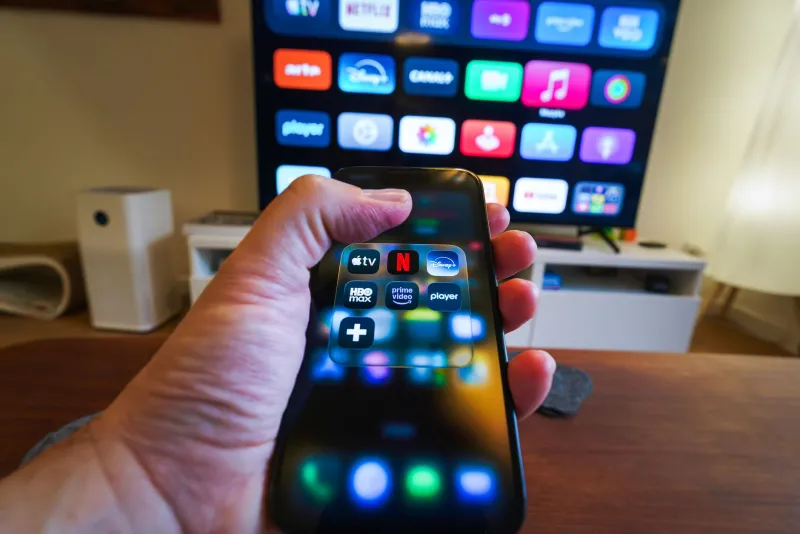
Welcome to DisasterFun's first-ever interactive streaming survival guide. Your choices are real. The consequences are absurd. The monthly charges are very, very real.
Once upon a time — specifically, around 2013 — streaming was the promised land. No more cable bundles. No more paying for 400 channels to watch four of them. No more DVR that always somehow filled up right before the season finale.
Streaming was freedom. Streaming was the future.
Streaming is now eleven different services, a combined monthly bill that rivals your car payment, and a Tuesday night where you spend forty-five minutes choosing something to watch and then fall asleep during the opening credits.
This is your story. Choose wisely. (You won't.)
🔴 START HERE: You Open Your Streaming App on a Friday Night
You have had a long week. You deserve entertainment. You pick up the remote with the quiet confidence of someone who has many options.
You have too many options. This is already a problem.
Do you:
A) Open Netflix, where you are greeted by a new interface that has rearranged everything you knew and replaced your watchlist with a row called "Top 10 in the U.S." featuring three shows you have never heard of → Go to Section 1
B) Open a different app — one of the other seven you're paying for — with the vague hope that something good is on there → Go to Section 2
C) Stare at the home screen for so long that the TV turns itself off in concern → Go to Section 7: The Void
Section 1: The Netflix Labyrinth
Ah, Netflix. The one that started it all. The one that killed Blockbuster, which killed a part of your Friday night ritual that you didn't know you'd miss until it was gone.
Netflix in 2026 is a fascinating organism. It has more content than any human could watch in a lifetime, and yet somehow, every third Friday, there is nothing on.
You scroll. The algorithm — a creature of inscrutable logic — serves you a Spanish-language thriller you watched the first episode of in 2021, a documentary about a crime you already know the ending to, and a reality dating show with a concept so deranged it loops back around to being compelling.
But wait. You notice that the show you were halfway through — the one you recommended to your coworker, the one you were invested in — is gone. Not moved. Not rescheduled. Gone.
Cancelled after one season. The notification came and went like a whisper in a hurricane.
Do you:
A) Accept your loss and start something new, knowing it too may be cancelled before its natural conclusion → Go to Section 3
B) Log into your ex's account out of spite, only to discover Netflix has logged you out because of the password-sharing crackdown → Go to Section 4
C) Write an angry tweet about the cancellation and receive zero engagement because twelve other shows were also cancelled this week → Go to Section 7: The Void
Section 2: The Multi-Platform Shuffle
You are paying for, let's count: Netflix, Hulu, Max, Peacock, Paramount+, Disney+, Apple TV+, and — for reasons you can no longer fully explain — the AMC+ add-on you got during a free trial in 2022.
You open Hulu. There is an ad. There is always an ad, because you have the cheaper tier, and you have the cheaper tier because you are already paying for seven other services.
The ad is for a streaming service.
You open Max, which used to be HBO Max, which used to be HBO Go, which used to be a thing you got with cable. Max has prestige television and also a truly bewildering collection of content that feels like it was acquired at a garage sale. You scroll past a cooking competition, three DC movies, and something called Batwheels before finding the show you wanted.
The show you wanted is not on Max. It was moved to Peacock.
Do you:
A) Open Peacock, where it is technically available but only on the Premium tier, which you do not have → Go to Section 5
B) Decide this is all too much and look up how to cancel one of your subscriptions, only to realize the cancel button is buried under four confirmation screens and a guilt-trip message that says "Are you sure? Here's what you'll be missing" → Go to Section 6
Section 3: The New Show Gamble
You've decided to start something fresh. A new show. Unburdened by the grief of cancelled storylines and abandoned characters.
You pick something with good reviews, a strong cast, and a premise that sounds genuinely interesting. You watch the first two episodes. You are hooked. You tell people about it.
One month later, it is cancelled.
The showrunner posts a heartfelt message on Instagram. The cast retweets it. A petition gathers 40,000 signatures and accomplishes nothing. The show disappears from the platform six weeks later because of a tax write-off strategy that you don't fully understand but resent on a cellular level.
You are back to the beginning. Return to START. Do not collect $200. You already spent it on subscriptions.
Section 4: The Password Crackdown Reckoning
Netflix's password-sharing ban was announced with the energy of a disappointed parent. They called it "account sharing" in the press releases, which is technically accurate and also completely bloodless as a description of what they were doing, which was charging your college roommate $8 a month to watch The Crown from a different zip code.
You have been locked out. You must now decide: pay for your own account, or finally reckon with the fact that you've been mooching since 2019.
You pay for your own account. Netflix thanks you. Their quarterly earnings report thanks you. Reed Hastings' net worth thanks you.
You scroll for forty-five minutes and watch the first twenty minutes of a movie before falling asleep.
Congratulations. You are a paying customer now. This is what you paid for.
Section 5: The Upgrade Trap
Peacock wants $5.99 more per month for the Premium tier. This is, objectively, not that much money. This is also the fourth time this month a streaming service has asked you for a little more money, and the cumulative effect is that you are now paying approximately what you paid for cable in 2015, except fragmented across eight apps with eight different interfaces and eight different recommendation algorithms that all think they know you and none of them do.
You upgrade. You watch the show. It is fine. It is not worth the cumulative psychic damage of this journey, but it is fine.
You do not cancel the upgrade afterward because you forgot and also the cancel button is buried.
Section 6: The Cancellation Maze
You have decided to cancel something. You are taking control. This is a power move.
The streaming service does not want you to cancel. The streaming service has designed its cancellation flow the way a corn maze is designed: technically navigable, but deeply discouraging.
Three screens in, it offers you a discounted rate. You take it, because you're not a monster, and $2 off is $2 off.
You have not cancelled anything. You have negotiated with a corporation and emerged slightly ahead but fundamentally unchanged.
Section 7: The Void
You watched nothing. You scrolled for so long that the act of choosing became the entire evening's activity. You went to bed at 10:15 PM having consumed zero content and somehow feeling more exhausted than if you'd watched three episodes of something.
This is, neurologically, what decision fatigue looks like. This is also, apparently, what having too many options looks like.
You know who didn't have this problem?
People with cable.
EPILOGUE: The Cable Guy Cometh
Here's the punchline that nobody wanted to arrive at but all roads seem to lead to: cable is making a comeback, and it is doing so by being exactly what it always was — a bundled, overpriced, algorithmically-free experience where someone else decides what's on and you either watch it or you don't.
Comcast reported subscriber upticks in 2024. YouTube TV has more subscribers than most people realize. Fubo exists. Sling exists. We are, in slow motion, reinventing the cable bundle and calling it a "streaming package" because we cannot psychologically admit what has happened.
We escaped cable. We built something more complicated, more expensive, and more fragmented in its place. And now we are, quietly, returning.
The cable guy is waiting. He has a smug expression and a 200-channel bundle.
And honestly? At this point? Maybe. Maybe.
DisasterFun's official streaming recommendation: watch whatever's on. You've already paid for it.