Grocery Store Radicalization Is Real and Your Seed Oil Opinions Are Proof
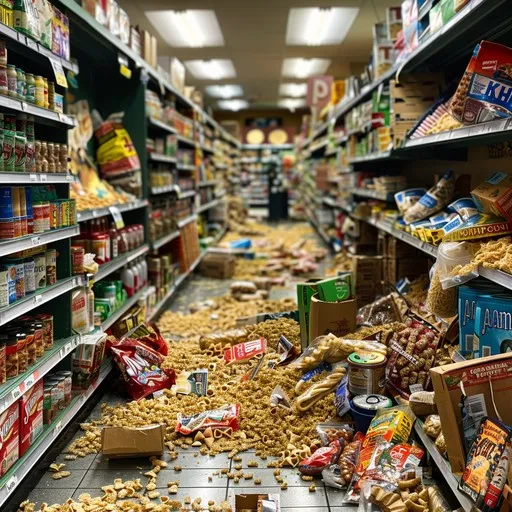
Photo: chaotic grocery store aisle conspiracy food trends, via images.stockcake.com
There was a time, not so long ago, when a trip to the grocery store was a relatively neutral experience. You grabbed your cart, argued with yourself about whether you needed a third block of cheese (you did), and went home. Nobody's moral character was on trial in the condiment aisle. Those days are gone. Dead. Buried under a pile of tallow-fried steak and carnivore diet manifestos.
Welcome to 2024, where your choice of cooking fat has become a personality test, a political affiliation, and apparently, evidence of whether or not you're awake to the grand machinations of Big Agra. Buckle up, because this ride is completely unhinged.
How Seed Oils Became the Villain in Someone Else's Action Movie
Let's start with seed oils, the unlikely protagonist — or antagonist, depending on which corner of TikTok raised you — of this whole debacle. Canola oil, vegetable oil, sunflower oil: for decades these were the boring workhorses of American cooking. Cheap, functional, unremarkable. Then, somewhere around 2022, a critical mass of podcasters, wellness influencers, and people who really, really love Joe Rogan decided that seed oils were, in fact, the root cause of everything wrong with the modern world.
Inflammation? Seed oils. Chronic disease? Seed oils. The general vibe that society is collapsing? You guessed it — someone's frying something in canola.
Actual registered dietitians have watched this unfold with the haunted expressions of people who studied for years only to discover their expertise is now considered less credible than a guy with a podcast and an aggressive jawline. "The research is genuinely complicated and nuanced," said approximately every nutritionist alive, to absolutely no one who was listening.
Nuance, as it turns out, does not go viral.
The Carnivore Diet: Beef as Ideology
If seed oils are the villain, the carnivore diet is the hero wearing a cowboy hat and refusing to eat anything that didn't once have a face. The premise is simple: eat only animal products, preferably beef, preferably from a cow that lived a better life than you do. The subtext is considerably more complex.
The carnivore community online has achieved something remarkable — they've turned eating a ribeye into a revolutionary act. There are Reddit threads that read less like cooking advice and more like manifestos. There are before-and-after photos where the transformation isn't just physical but spiritual, as though the absence of vegetables has granted access to some primal masculine clarity unavailable to people who eat salad.
And look, if eating steak makes someone feel great, genuinely, good for them. The problem is the leap from "this diet works for me" to "this diet is the only truth and vegetables are a psyop." That leap happens at a speed that would impress Olympic sprinters.
Seed Cycling: The Gentler Conspiracy, Still Absolutely Wild
On the other end of the wellness-to-conspiracy pipeline sits seed cycling, which sounds innocent enough — eating specific seeds during specific phases of your menstrual cycle to balance hormones. It has a softer aesthetic. More linen. More moon imagery. The TikToks have good lighting.
But spend enough time in those comment sections and you'll find the same fundamental architecture: a distrust of conventional medicine, a belief that pharmaceutical companies are suppressing simple natural cures, and a certainty that your gynecologist is either ignorant or complicit. The aesthetic is different. The epistemological chaos is identical.
What's genuinely fascinating — and by fascinating we mean deeply concerning — is how both the carnivore bros and the seed cycling girlies arrived at the same destination from completely opposite directions. Different tribes. Different aesthetics. Same core conviction that the medical establishment is lying to them and that the truth lives in their grocery cart.
TikTok Turned Your Pantry Into a Culture War
The algorithm deserves significant credit — or blame — for all of this. TikTok and Reddit are extraordinary engines for taking a fringe idea and stress-testing it against millions of users until the most emotionally resonant, most outrage-compatible version rises to the top. Complexity gets sanded off. Caveats disappear. What remains is clean, shareable, and usually wrong.
A nutritionist posts a careful, evidence-based explainer about dietary fats. It gets 4,000 views. A guy in a truck who hasn't touched a vegetable since 2021 posts a video claiming canola oil is making men infertile and it hits 4 million. The algorithm didn't create the conspiracy, but it absolutely gave it a megaphone and a ring light.
The result is a food culture where choosing olive oil can feel like a political statement, where grocery shopping requires knowing which tribe you're signaling loyalty to, and where the phrase "do your own research" has somehow migrated from anti-vaccine forums to the butter section of Whole Foods.
The Nutritionists Are Not Okay
Spare a thought for the registered dietitians. These are people who went through years of rigorous education, clinical training, and board certification, only to find themselves in a landscape where their credentials are treated as suspicious — possibly because they're too mainstream, too establishment, too suspiciously unafraid of canola oil.
Many have pivoted to social media themselves, attempting to meet the chaos where it lives. They debunk seed oil myths on Instagram reels. They make explainers about why the carnivore diet isn't a peer-reviewed medical intervention. They are, to use the clinical term, exhausted.
"I spent eight years in school for this," one dietitian wrote on Twitter, beneath a post fact-checking a viral claim that sunflower oil was invented by the government. The tweet got 200 likes. The viral claim had 800,000.
What Any of This Is Actually About
Here's the thing that nobody in the seed oil discourse wants to say out loud: a lot of this isn't really about food. It's about trust — or more specifically, the catastrophic collapse of it. When institutions fail people, when healthcare is unaffordable, when chronic illness rates genuinely are rising and the official answers feel insufficient, people go looking for explanations. Food is accessible. Food is something you can control. Food gives you agency when everything else feels like it's happening to you.
The conspiracy part is where it goes sideways. Because the answer to legitimate institutional distrust isn't to replace evidence-based medicine with a guy on YouTube who thinks seed oils are a depopulation strategy. It's just trading one set of authorities for another, except the new ones sell supplements.
But rationality has terrible production value, and the grocery store radicalization pipeline has excellent thumbnails.
Eat whatever you want. Just maybe don't make it a whole thing.