Cry, Post, Repeat: The Unofficial Playbook Behind Every Influencer's Televised Nervous Breakdown

Photo: D. Sharon Pruitt from Hill Air Force Base, Utah, USA, CC BY 2.0, via Wikimedia Commons
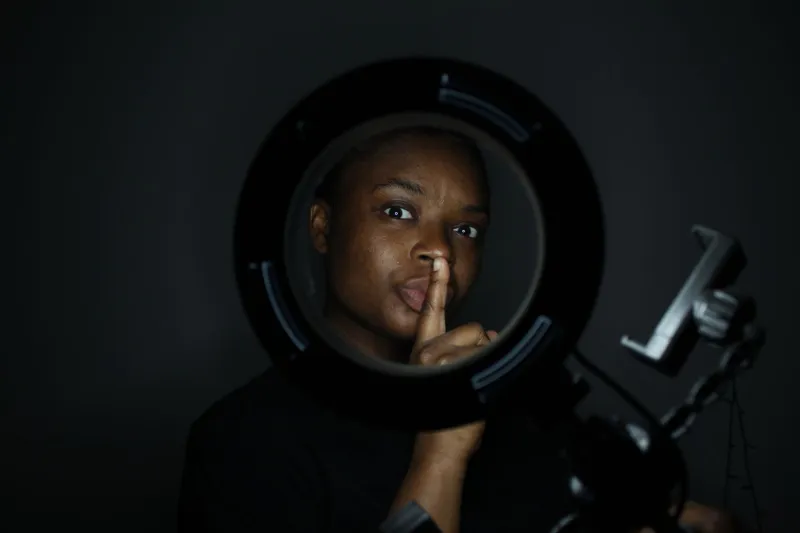
Somewhere in a Ring-light-lit bedroom, a person with 4.2 million followers is about to cry into a camera. They're not sad, exactly. They're strategic. The tears are real in the same way a Hallmark movie is real — technically filmed, technically emotional, technically designed to sell you something. Welcome to the Influencer Apology Industrial Complex, the most profitable cottage industry since someone figured out you could charge $80 for a water bottle if you put the right logo on it.
Let's be clear: we are not here to shame anyone. We are here to document. Consider this your field guide to one of America's most reliable entertainment formats.
Step One: The Incident (Every Great Story Needs a Villain, and It's Them)
Every apology begins with a sin. The sin can range in severity — from "said something mildly tone-deaf in a 2019 tweet someone just found" to "actually defrauded a significant portion of my fan base." The beauty of the modern apology economy is that the formula barely changes regardless of which end of the spectrum you're on.
The incident must first marinate on social media for approximately 48 to 72 hours. This is non-negotiable. The influencer goes silent — not because they're reflecting, but because their PR team is running focus groups on which specific flavor of remorse will test best with the 18-to-34 demographic. During this window, fan accounts will fracture into factions. Legacy stans will defend the indefensible. Critics will post explainer threads. Someone's mom will comment "I don't understand what's happening but I support you sweetie" and get 14,000 likes.
The Decision Tree (Condensed for Your Convenience)
Here's the thing nobody talks about: there is a literal decision tree governing which apology format gets deployed, and it runs like a flowchart designed by someone who minored in crisis communications and majored in never actually admitting fault.
Did the scandal involve money? Go directly to the tearful sit-down video with a neutral-toned background and a single plant. Do not pass Go. Do not address the specific dollar amounts.
Did the scandal involve something you said? Post a Notes app screenshot at 11:47 PM. Bonus points if the font is slightly too small to read comfortably on mobile. Include the phrase "I have been doing a lot of learning."
Did the scandal involve a former friend or collaborator? This one's fun. You get to be both the victim and the apologizer simultaneously, a rhetorical tightrope walk that requires saying "I take full accountability" while also implying the other person is unstable.
Is the scandal bad enough to require a documentary? Congratulations — you've graduated to the prestige tier. Netflix is already calling.
Step Two: The Video (Lighting Is Everything, Sincerity Is Optional)
The apology video is the cornerstone of the whole operation, and it has rules. Unspoken, unwritten, universally understood rules.
First: no makeup, or the appearance of no makeup, which actually requires more makeup than full glam. The goal is "I have been crying for days" not "I have been crying for days and also contouring." Second: the background must be stripped of branding. No merch in frame. No sponsor banners. The bedroom should look like the set of a low-budget indie film about a person who has definitely learned their lesson. Third: there will be a pause. A long one. Right before the key admission. The pause says this is heavy for me even when the admission is something like "I shouldn't have implied that my fans were overreacting."
The video will be between nine and fourteen minutes long. Any shorter reads as dismissive. Any longer and people start skipping to the good parts.
Step Three: The Comeback Arc (The Part Where We All Pretend to Forget)
Here's where the magic happens. The apology video drops. The comments are a warzone for approximately 72 hours. Then — and this is the part that would be impressive if it weren't so exhausting — the audience starts rooting for them again.
It's not stupidity. It's not even gullibility. It's something closer to narrative addiction. Americans love a redemption arc the way they love a sequel — not because it's necessarily better than the original, but because it's familiar. We already know the characters. We're invested. Pulling out now feels like leaving a movie before the third act.
The comeback tour has its own choreography. First comes the "I've been focusing on my mental health" post, accompanied by a photo that looks effortlessly peaceful but was clearly taken by a professional photographer. Then comes the soft relaunch — a low-stakes piece of content, maybe a "day in my life" video, nothing controversial, just vibes. The comment section fills with "so glad you're back" and "we missed you" from people who were calling for their head two weeks ago.
By month three, there's new merch.
Why We Keep Watching (An Uncomfortable Mirror Moment)
Let's not pretend we're all just passive observers here. The Influencer Apology Industrial Complex runs on attention, and attention is something we hand over freely and often. Every view on the apology video is a vote. Every subtweet is a donation. Every article dissecting the whole spectacle — yes, including this one — is a brick in the machine.
The reason the formula works isn't because influencers are uniquely manipulative. It's because the formula maps almost perfectly onto the emotional rhythms we're already wired for: transgression, consequence, confession, forgiveness. It's a church service for people who don't go to church. It's a courtroom drama where the verdict is delivered by algorithm.
And as long as we keep showing up — which, let's be honest, we absolutely will — the next apology video is already in pre-production. The ring light is warming up. Someone is figuring out which plant looks most sincere.
See you in the comments.