We Are All Rooting for the Fire: What Our Obsession With Fictional Catastrophe Says About Us
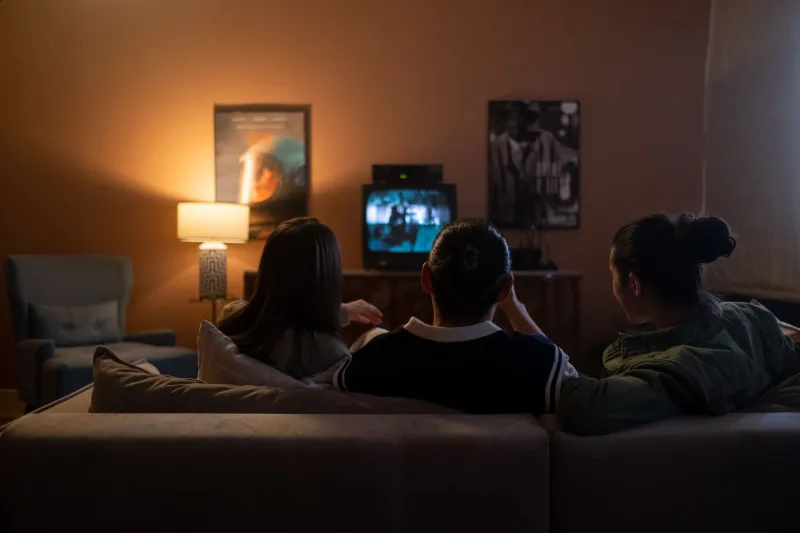
There is a specific kind of contentment that settles over a person watching a prestige TV antihero make the single worst decision available to them. It's not joy, exactly. It's not schadenfreude in its pure form. It's something more like relief — the deep, exhaled satisfaction of watching a disaster happen to someone who isn't you, in a world that isn't real, for reasons that are entirely their own fault.
We are, as a culture, absolutely addicted to this feeling. And 2024 has been an extraordinarily good year for feeding it.
The Collapse Is the Content
Consider what we're actually choosing to watch when we sit down to decompress. The Bear giving us a restaurant kitchen that operates at the stress level of a combat zone. Succession reruns still circulating like emotional support material for people who want to feel better about their own families. Reality TV delivering real-time meltdowns with the reliability of a streaming service algorithm that has studied your soul.
The through-line is not genre. It's entropy. We are watching things fall apart, and we are choosing this. Voluntarily. On purpose. After a day of presumably trying very hard to keep our own things from falling apart.
The question worth asking — and then sitting with uncomfortably — is: why?
The Anxiety Transfer Theory
Here's one explanation that holds up to mild scrutiny: we are living in a period of sustained, low-grade collective anxiety that has no obvious endpoint. The news cycle is a fire hose. The economy is confusing. The climate is doing things. The discourse is always, always happening.
In this environment, watching fictional chaos may function as a kind of controlled burn. You get the neurological experience of witnessing a crisis — the tension, the stakes, the release — without any of the actual consequences. Your cortisol spikes and then resolves. The credits roll. The world is fine. You are fine.
Fictional disasters are one of the few places where the chaos has an ending. Where someone is in charge of the narrative arc. Where the destruction, however spectacular, is ultimately contained. That's not a small thing when you live in a news environment where nothing ever quite resolves.
In other words: we watch Walter White burn his life down because our own life's potential for combustion feels unscripted and therefore much scarier.
The Antihero as Emotional Proxy
There's also something specific happening with antiheroes that deserves examination. We don't just watch them fail — we root for them, right up until the moment we don't, and sometimes past that point too.
Walter White, Tony Soprano, Kendall Roy, the entire cast of The Real Housewives of Wherever — these are people making choices we would theoretically never make, in situations we would theoretically handle better. And yet we are deeply, uncomfortably invested in their outcomes.
Part of this is craft. Good writing creates identification before it creates condemnation. You're inside the logic of the character before you've fully clocked how broken that logic is. By the time you realize you've been rooting for someone genuinely terrible, you're five seasons in and emotionally compromised.
But part of it is something else. Watching a character act out the impulses that real life requires you to suppress — the rage, the selfishness, the refusal to compromise — is its own form of vicarious release. The antihero does what the anxiety won't let you do. They blow it up. They walk away. They make the dramatic choice instead of the sensible one.
We applaud, and somewhere in our nervous systems, something loosens.
Reality TV: The Documentary Branch of the Disaster Arts
If prestige drama is the literary wing of our catastrophe obsession, reality TV is the street-level dispatch. And it has never been more popular.
The reality show meltdown — the crying confessional, the table flip, the mic-drop elimination — functions differently than fictional collapse because the person experiencing it is, technically, real. This should make it harder to watch. In practice, it makes it harder to stop watching.
There's a whole uncomfortable conversation to be had about the ethics of this, and to DisasterFun's credit, we're going to have exactly half of it: the audiences for these moments are not purely cruel. Many viewers report genuine empathy alongside the entertainment. They're not watching because someone is suffering. They're watching because the suffering is legible — it's big, externalized, edited for maximum emotional impact, and therefore easier to process than the ambient suffering of their own Tuesday.
Reality TV grief hits different than real grief. It has commercial breaks.
Doom-Scrolling and the Desensitization Question
The darker angle — and we'd be doing you a disservice to skip it — is the desensitization hypothesis. Spend enough time consuming catastrophe content, fictional or otherwise, and the threshold for what registers as alarming quietly shifts upward.
There's real research suggesting that heavy news consumption and doom-scrolling behavior are correlated with both increased anxiety and decreased emotional responsiveness to individual events. You feel worse overall but react less to specifics. The brain adapts, as brains do, by turning down the sensitivity dial.
If that's true, then our appetite for fictional disaster isn't just a coping mechanism — it might also be a symptom of a coping mechanism that's already been running too long. We're not watching collapse to feel better. We're watching it because we've gotten so used to the frequency that we need it to feel anything at all.
That's a bleaker read. It's also, if we're being honest, not entirely implausible.
So What Now
None of this means you should stop watching. That would be insane advice from a website called DisasterFun, and we stand by our brand.
But there's something worth noticing in the pattern. When the content that relaxes you is content about things going catastrophically wrong, that's information. It tells you something about what you're carrying around, about what the background noise of your life sounds like, about what kind of emotional release valve you've apparently needed to install.
We are all, in some sense, rooting for the fire because the fire in the show is the only fire we feel like we can watch without having to do anything about it.
The credits will roll. The world will still be there.
Maybe that's enough. Maybe it isn't. Either way, there's a new season dropping Friday.